Norse Pagans Today

The Truth About Norse Pagans Today
I first learned about Paganism in a small room in a little hall in my old town in Oxford in 1996 in England. I always wondered about norse paganism today so I decided to go on a quest. Is it still relevant? What do people still think?
Okay, so what I know is that norse pagans today are so different from the past. In my village there is a forest area, a lake and a camp experience that happens every 12 months. It is lovely this is where in 2026 I decided to spend the night, a night with Pagans. There was all sorts of people there, home-made soup, bread and lot's of oats, the smell of incense and the night was a camp fire and marshmellows.
I found out after being there for a few hours, this was a celebration of Thor, which is a god that is connected to both the storms and harvest. The religion now has a new name it is known as Ásatrú, Heathenry, or Forn Sed, all of these names basically point to being a pagan. I do think after this festival I went to it to make a comeback in life. I spoke at length with a guy who played the drums, he shared with me what he believed. He thought that humanity is one of nine worlds all connected to the tree of life. And, the beings of fairies, dwarfs are all true. Denmark is the country that is supposed to be the most popular, and it is not that common, but is making a massive comeback. If we turn back time, the gods of Thor (the festival I went to), Freya and Loki were worshiped and in Sweden there is a temple being made, they follow what is known as the polytheistic system which means they worship gods and spiritual ancestors of the land. In total in 2026 from my research there is about 3,400 pagans.
Who is a modern pagan?
I need to answer this with the technical term ‘pagan’, it is a Latin variant of pagania and paganus, indicating one who lived in the country or literally ‘rural dweller’. It is not simply that these people lived in the country, but more specifically, once the cities in Rome were taken over by Christianity those who lived outside of the city tended to keep a more ‘nature friendly’ religion. My teacher at the time drilled this into us, she was referring to those that practiced various local traditions that often included animal sacrifice, graven image creation (like the wicker man for Lughnasadh), dancing, earth worshipping, and all these sorts of things.
You are probably wondering about what this norse paganism means today and what are we all doing. Do I consider myself pagan? Sort of.
Modern paganism is kind of like a massive umbrella to spirituality. You can ask 20 people who identify as being pagan to define the word and ultimately get back 20 different responses. Pagans of today are referred to generally as people who practice witchcraft, magik, Wicca, or some earth-based polytheistic religion. What I have seen though, especially on Tiktok is tarot readers now massively shifting over to God and Christianity. When you look at it that this way; this leaves a lot of room for interpretation!
Norse paganism today, is what I consider a living religion, and is practiced by tens of thousands of persons worldwide, officially recognized by most secular governments, and sincerely taken by those who practice it in ways many outsiders underestimate.
There are estimated to be some 40,000 practitioners of it all over 100 nations today. Ásatrú is currently the fastest growing religion in Iceland and is also a recognized religion by the U.S. Department of Defense granting religious accommodations to professionals in all military branches.
What you should call it (and why it's important) The one thing I noticed when I started digging into this was that there wasn't an agreed upon name. I do not think this is just a question of personal preference, or, "what's your cup of tea?" In my view, the options with the names have become part of a more serious question: "who is this religion actually for?" Gods that represent Order, Leadership, Law, are Odin, Thor, Tyr, and also the Vanir, gods who is linked to fertility and the natural world such as Freyr and Freyja. It's also the Jötnar, whose etymology roughly translates as "giants", if for nothing else they really are giants, that represent nature's more wild, untamed side in often adversarial relationships.
What strikes me as most insane and honest about Wicca is how small a role power plays in its current world. There is no Holy Book or final word, no governing council. My experience with Wicca has been that its power base shifts greatly from woman to woman. Some people of course worship the gods as living creatures.
Is this a religion?
I would say no. When I went to the camp I was told by them that it is not necessarily any tradition or religion but they certainly can be. Some pagans I saw there said they are Wiccan (a nature based Goddess and God worshipping religion) and some will simply consider themselves witches and yet still others are more agnostic than anything but open minded and don’t consider themselves Christian, Islamic, or Jewish and lump themselves into the pagan category.
You also have a large group of people that practice their faith based on older traditions and focus on one deity among many. For example, a person may consider themselves a ‘Dianic’ when they follow a tradition that worships the mythological Goddess Diana and follow her as the name of the ultimate deity. When you find these people who follow stricter traditions, they usually also accept that there are other deities but have bound themselves to one.
In my spiritual work, I have found many modern pagans still practice many old traditions, however often in a much different way. Consider that most people today are not as reliant on the earth as our ancestors were and so the tradition of appeasing the gods for a good grain crop is less relevant than simply appreciating the god and goddess for a good season and taking an active role in the spiritual cycle of life.
Perhaps some of the oldest modern pagans are witches who follow the Gardenarian (Followers of a tradition founded by Gerald Gardner) or Alexandrian traditions. These people are of a witchcraft tradition that follow strict laws of the universe, adhere to the will of the God and Goddess, and incorporate ceremonial magik and earth based magic into their rites.
By Florance Saul
Created: Nov 6, 2012 | Modified: Aug 2, 2026
Auntyflo Tarot Wheel
Wondering what the future holds? Spin my tarot wheel to find out.
What does your palm mean?
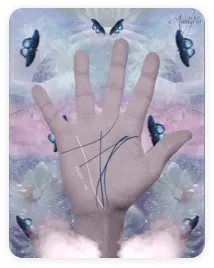
Celebrating over 15 years online. The most acclaimed illustrated palm reading guide.